

Beginner’s Guide to Fly Fishing Gear Essentials
01/12/2026
Casting Techniques: From Basics to Advanced Skills
01/12/2026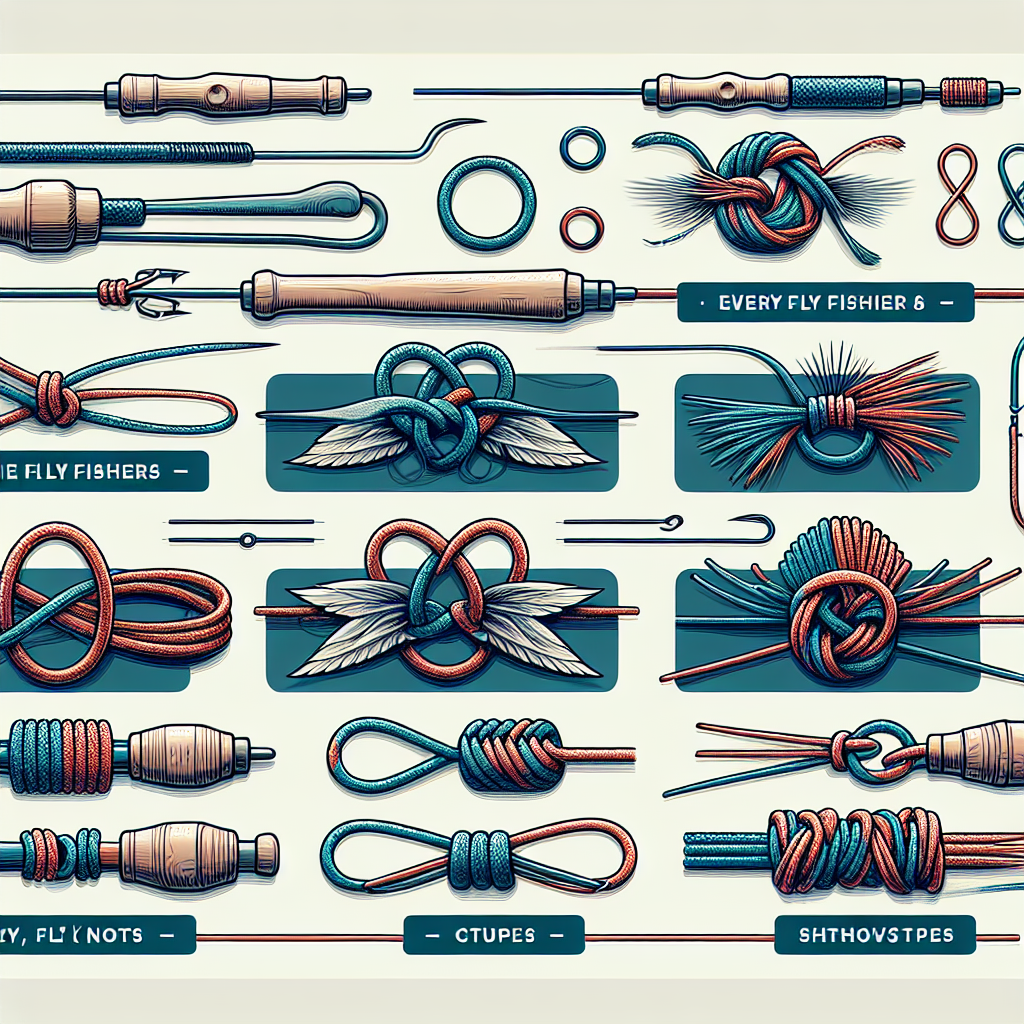
Top 10 Knots Every Fly Fisher Should Know
Introduction
Fly fishing is not just about casting a line; it’s an intricate dance between the angler, the water, and the fish. One of the most crucial skills every fly fisher must master is knot-tying. A reliable knot can mean the difference between landing that trophy fish and watching it swim away. In this article, we will explore the top 10 knots every fly fisher should know, providing you with practical details and expert tips to enhance your fishing experience.
1. The Improved Clinch Knot
The Improved Clinch Knot is a classic choice for securing your fly to the tippet. It is easy to learn and offers great strength.
- Thread the tippet through the fly’s eye.
- Wrap the tippet around the standing line 5-7 times.
- Pass the end of the tippet back through the loop near the eye.
- Moisten the knot and pull tight.
2. The Palomar Knot
Renowned for its strength, the Palomar Knot is perfect for tying on flies and lures. It works well with both braided and monofilament lines.
- Double the line and pass it through the hook’s eye.
- Make an overhand knot, leaving a loop.
- Pass the loop over the hook and tighten the knot.
3. The Loop Knot
The Loop Knot allows your fly to move more naturally in the water. It’s particularly useful when fishing with streamers.
- Pass the line through the fly’s eye.
- Create a loop and wrap the standing line around the loop 5-7 times.
- Thread the end of the line through the loop and tighten.
4. The Blood Knot
The Blood Knot is essential for joining two lines, making it perfect for connecting tippet to leader.
- Overlap the two lines and twist them together 5-7 times.
- Thread the end of each line through the opposite loops.
- Moisten and pull both ends to tighten.
5. The Surgeon’s Knot
If you need to quickly connect two lines of different diameters, the Surgeon’s Knot is your go-to option.
- Align the two lines next to each other.
- Make a simple overhand knot and then pass both ends through the loop.
- Tighten to secure.
6. The Double Uni Knot
The Double Uni Knot is versatile for attaching tippets to leaders or connecting lines of similar diameters.
- Overlap the two lines and create a loop.
- Wrap the tag end of one line around both lines 5-7 times.
- Tighten both knots simultaneously.
7. The Nail Knot
Ideal for attaching a leader to a fly line, the Nail Knot is a favorite among many fly fishers.
- Use a small nail or a similar object to form a loop with the leader.
- Wrap the fly line around the nail and the leader 5-7 times.
- Slide the knot off the nail and tighten.
8. The Bimini Twist
The Bimini Twist creates a strong loop at the end of your line, allowing for better connection to swivels or hooks.
- Create a loop and twist it several times to form a bimini loop.
- Wrap the main line around the doubled line and pass through the loop.
- Tighten to secure.
9. The Figure Eight Knot
The Figure Eight Knot is a simple and effective way to create a stopper or attach a line to a ring.
- Form a loop in the line.
- Wrap the end around the standing line and through the loop.
- Pull tight to secure.
10. The Slip Knot
The Slip Knot is commonly used for temporary attachments, making it ideal for quick changes while on the water.
- Form a loop and pass the end through it.
- Tighten the loop around the desired object but leave it adjustable.
Conclusion
Mastering these 10 knots will equip you with the skills necessary to tackle various fly fishing situations. Each knot serves a specific purpose, enhancing your ability to connect effectively with your gear. Remember to practice these knots at home to ensure you can tie them confidently while out on the water. With the right knots in your arsenal, you’re one step closer to a successful fishing trip.